Today, I’d like to talk about a female patient
who had been receiving crown hair loss treatments
at another clinic for over a year,
with little success, and came to our clinic
for a crown hair transplant.
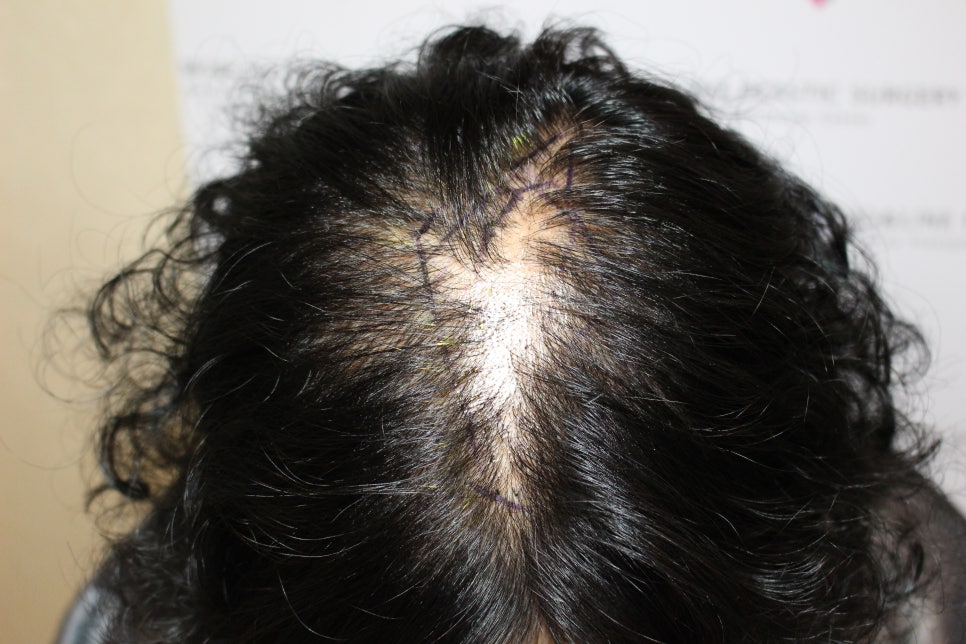
A woman who came to our clinic for a crown hair transplant after over a year of ineffective treatment for crown hair loss at another clinic.
As women reach their mid-30s, factors such as aging and stress
can cause hair around the crown
and part line to thin and fall out,
making the area look sparse.
This not only makes them appear older
but can also affect their sophisticated image.
However, with our high-density slit hair transplant techniques,
we can restore volume and density to the thinning crown area,
resulting in a more refined and youthful appearance.
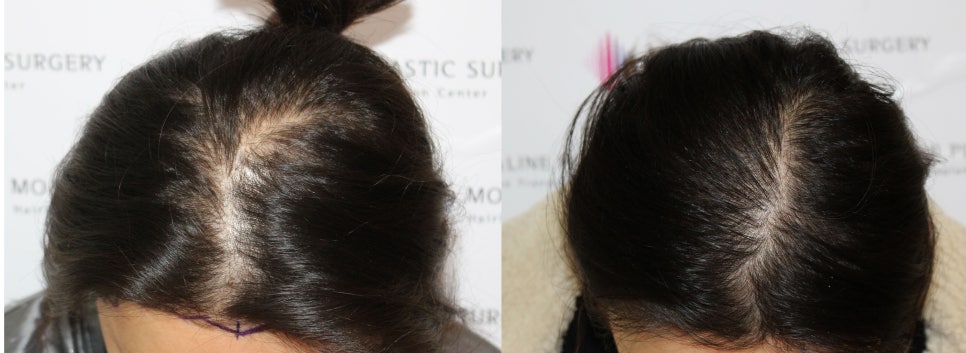
Before and after photos of a crown hair transplant (left: before surgery, right: after surgery).
Crown hair transplants require precision
to avoid damaging existing hair follicles
while accurately targeting the sparse areas
with high-density transplants.
Without sufficient experience and expertise,
there’s a risk of causing existing follicles to shed.
Using our dual slit and forceps transplant technique
with a micro-slit knife,
we can minimize the risk of existing follicle loss
during the procedure.
At our clinic, the head surgeon personally oversees
everything from consultation
and surgical planning to the procedure itself
and post-operative care,
ensuring a safe and personalized approach for each patient.
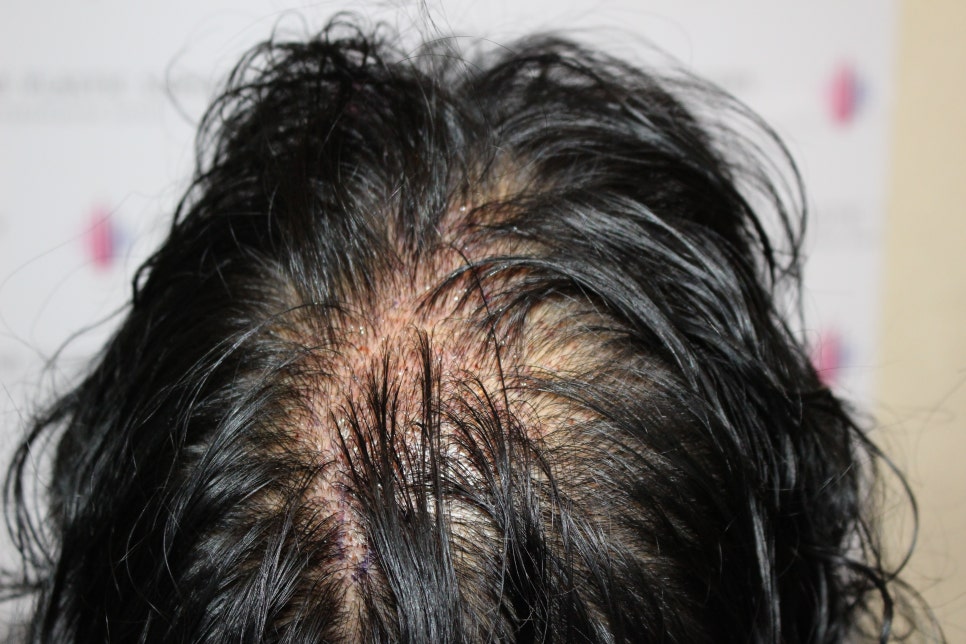
Day 1 after high-density slit hair transplant on the crown area – transplanted densely while avoiding the existing hair.
While baby and fine hairs
are usually transplanted in the hairline area,
for the part line or crown, we selectively extract
and transplant only thick,
healthy follicles to achieve a voluminous effect.
Even if the density of the hair at the back of the head is low
or the hair has become thinner, we carefully select and extract thick 2-hair or 3-hair follicles to ensure the best results.
For large-scale transplants of over 3,000 follicles
in the crown area,
we extract a large number of follicles
from the back of the head
using either the FUSS(FUT), FUE,
or hybrid (FUSS(FUT) + FUE) method,
minimizing scarring and preserving
the density of the donor area.
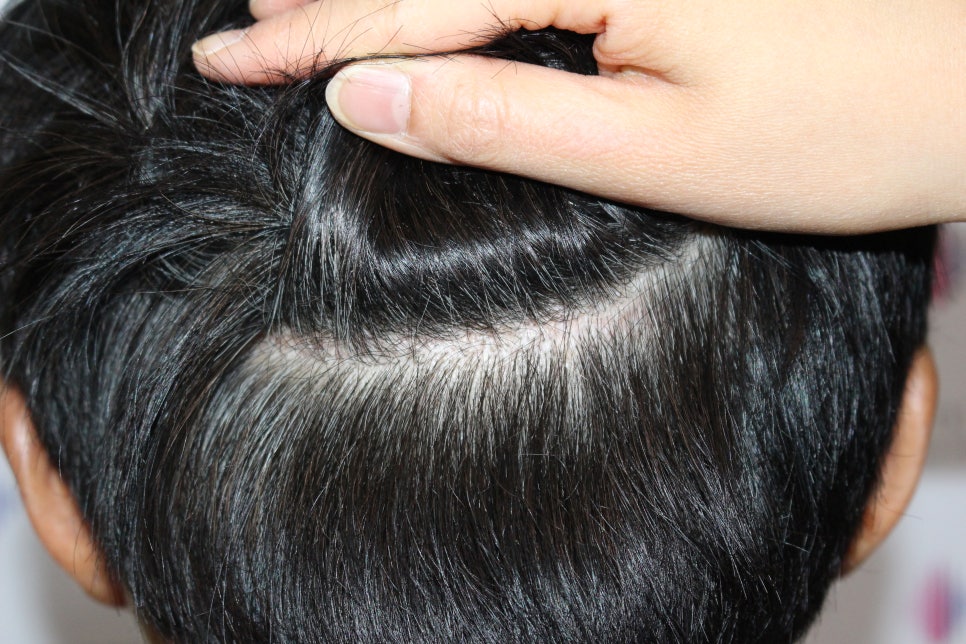
FUSS(FUT) area at the back of the head, 5 months after a large hybrid transplant (FUSS(FUT) + FUE).
Since the part line and crown are areas prone
to natural hair loss,
they require ongoing care even after a hair transplant.
It’s recommended to maintain the results
with medications, topical treatments,
and a scalp care program to prevent hair loss.
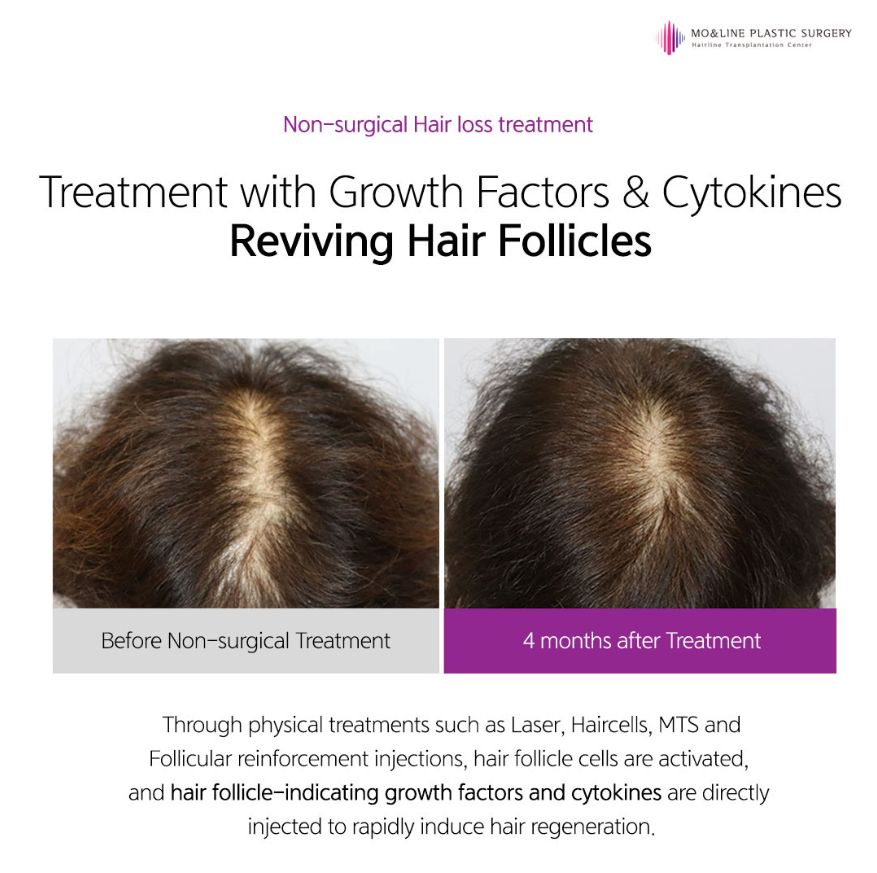
Consistent treatments such as HAIRCELL
using micro-magnetic fields,
LLLT (low-level laser therapy), and monthly follicle injections
containing stem cells, growth factors, and Botox
can prevent further hair loss during the resting phase,
increase hair thickness,
and give your hair more volume.
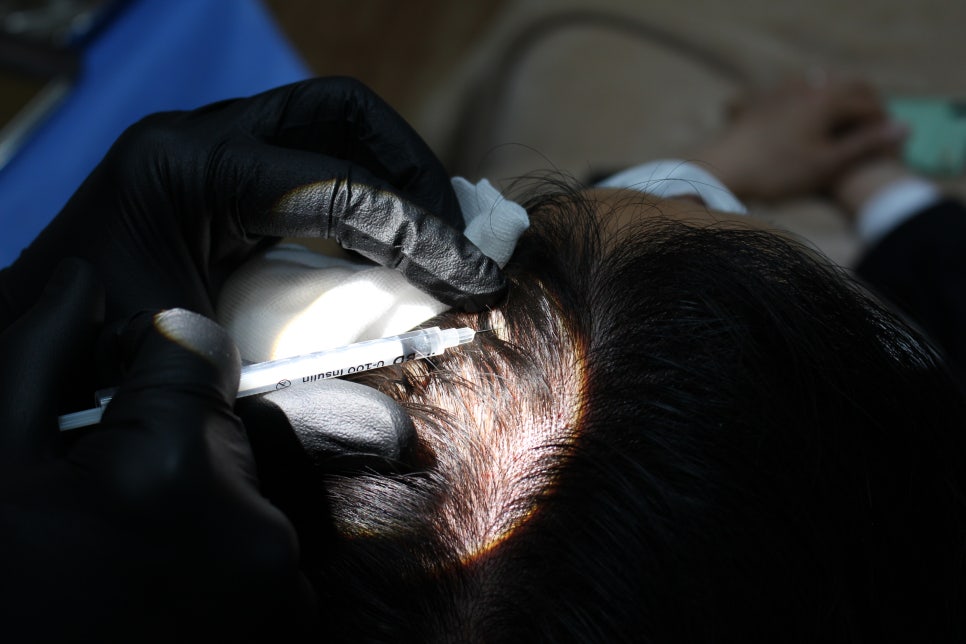
A patient receiving a follicle-strengthening injection, part of our crown hair loss prevention program.
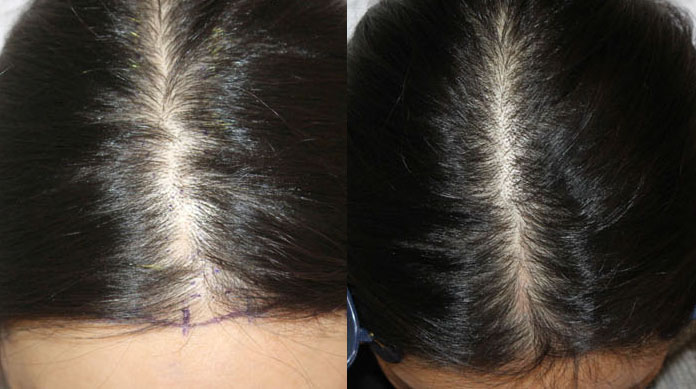
Before and after crown hair transplant surgery (Left: Before surgery, Right: 5 months after surgery).
Instead of unnatural wigs or semi-permanent tattoos
that fade and look awkward over time,
consider a crown and part line hair transplant surgery
using your own hair
to restore volume and density.
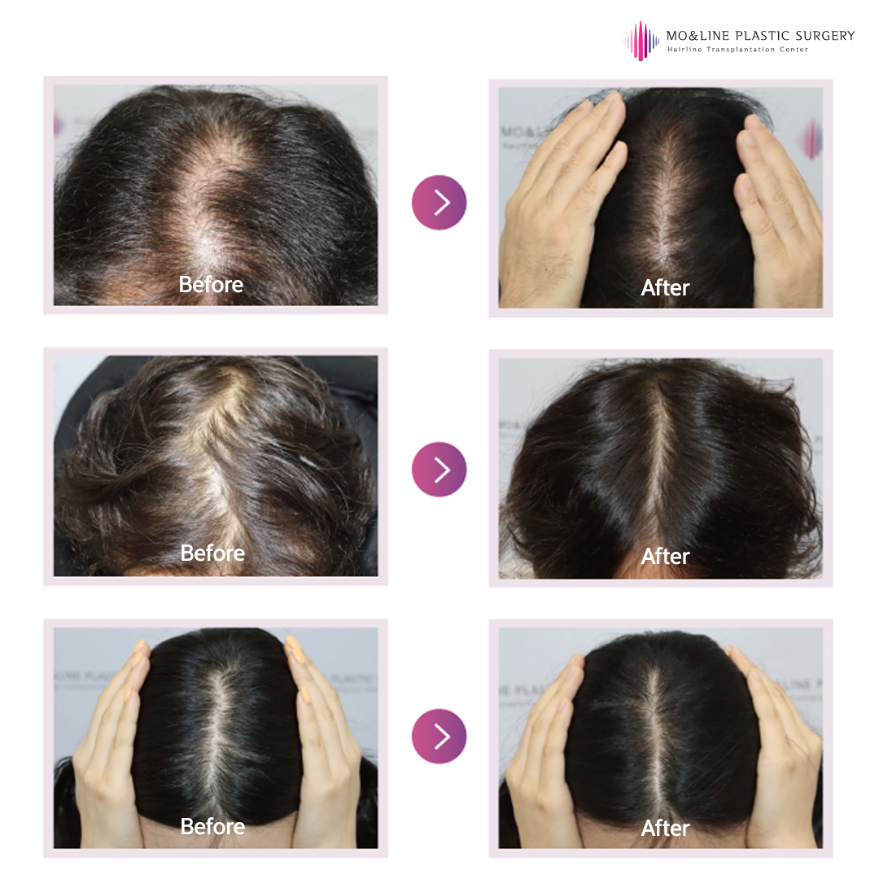

For price and other inquiries, contact ✉️E-mail or 📞 WhatsApp
💬moandlineps@naver.com
📞WhatsApp: +82 10 7327 4890
Instagram ⤵️
https://www.instagram.com/moandlineps.eng/
Homepage (English) ⤵️
http://moandlineps.com/foreign/en/
🩺 OPEN HOURS
WEEKDAYS(MON-THU) : AM 10:00 – PM 7:00
FRIDAYS : AM 10:00 – PM 9:00
SATURDAYS : AM 10:00 – PM 4:30
📍10F, 13F, 104, Dosan-daero, Gangnam-gu, Seoul,
Republic of Korea (Nonhyeon-dong, 1st Avenue)